
- Rooms
- Restaurant
- Swimming pool
- Groups
- Offers
- Our destinations
- Le Pré du Lac – Lake Annecy
- Le Rabuons – Mercantour National Park
- The Flocons Verts – Grand Massif
- The Flocons Verts – Grand Massif
- Le Télémark – Pralognan-la-Vanoise
- Le Vent du Large – Saint-Gilles-Croix-de-Vie
- Les Résidences d’Armor – Finistère
- Henri IV – Clisson
- Camping L’île du Chéran – Massif des Bauges
- Chadenas and Spa – Embrun
- Activities and Events
- Gallery
Creux du Van: Complete Guide to Discovering This Spectacular Rock Amphitheatre
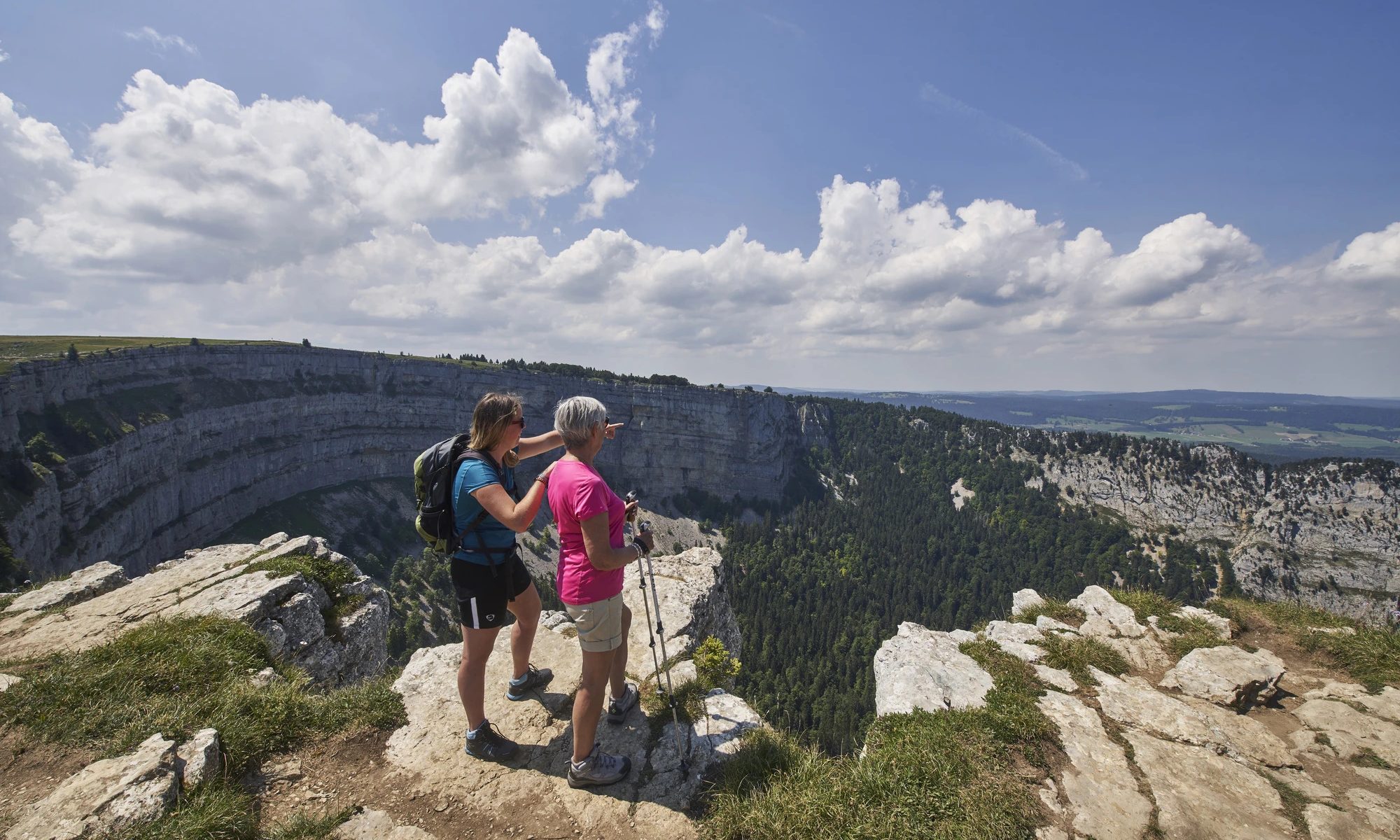
Looking for a change of scenery for your next adventure in the great outdoors? Creux du Van, a true geological wonder nestled in the heart of the Swiss Jura, is a breathtaking natural site. Nicknamed the “Swiss Grand Canyon,” this majestic rock amphitheatre offers spectacular panoramic views and fantastic hiking opportunities. Discover our complete guide to exploring this masterpiece of erosion, preparing for your ascent with peace of mind, and observing the local wildlife.
What is Creux du Van?
Let’s take a closer look at the remarkable geological origins and incredible ecological richness that characterize this iconic natural site in the Jura region!
An Exceptional Natural Rock Amphitheatre
Shaped over thousands of years by water and ice erosion, this natural rock amphitheatre forms a gigantic mineral arena. Its impressive vertical limestone cliffs reach nearly 200 metres in height and extend across an impressive width of approximately 1.4 km, creating a truly striking spectacle.
Location in the Canton of Neuchâtel
This spectacular rock formation is ideally located in the canton of Neuchâtel, close to the border with the canton of Vaud. Creux du Van lies at the end of the beautiful Val-de-Travers valley, offering a natural viewpoint over a large part of French-speaking Switzerland.
A Protected Nature Reserve
The site has been classified as a “nature reserve” for many decades (since 1870). This strict environmental protection has helped preserve this magical place, ensuring the conservation of its dense forests, flower-filled pastures and remarkable alpine biodiversity.